
Discover how agentic AI is transforming marketing in 2026 from notifications to reorders to personalized journeys. Learn what it means for your brand and how to prepare.
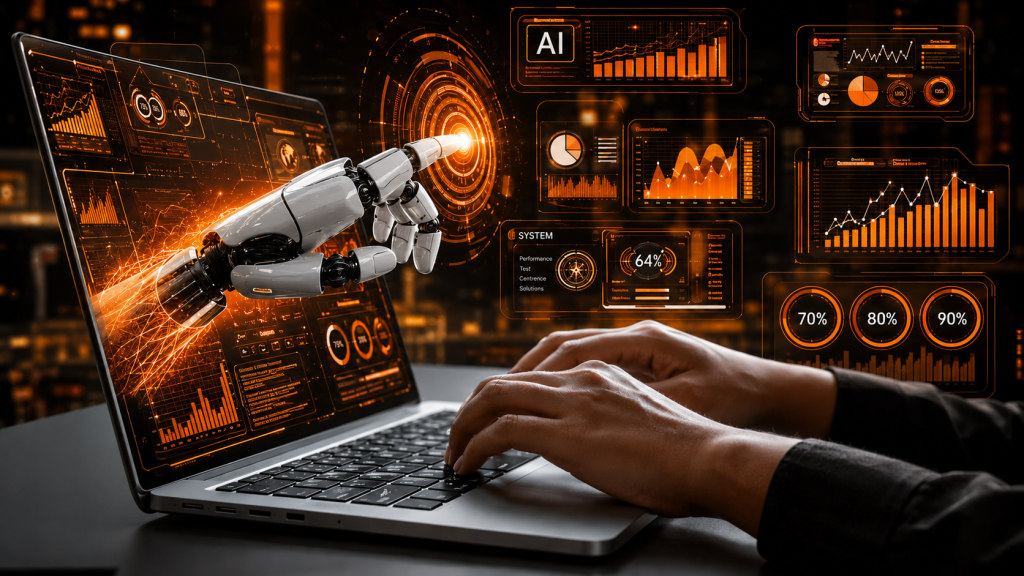
For the last few years, AI in marketing meant a copilot something that helped you write better subject lines, generate ad variations, or analyze a dashboard faster. That era is ending. In 2026, marketing is entering its agentic phase, where AI doesn’t just assist a campaign it runs it.
This shift is being called agentic marketing, and it’s one of the biggest structural changes marketing teams will face this year. Here’s what it actually means, why it’s happening now, and how your brand can prepare.
Agentic marketing refers to the use of autonomous AI agents that can plan, execute, and adjust marketing actions in real time without waiting for a human to approve every step. Instead of a marketer scheduling an email campaign and manually checking results, an AI agent can:
– Send a personalized reorder reminder the moment a customer’s product is likely running low
– Trigger a win-back offer when it detects early signs of churn
– Adjust messaging, timing, and channel based on how a specific customer is behaving right now
– Guide a shopper through product discovery in a conversational, back-and-forth exchange
The key difference from traditional marketing automation: these systems don’t just follow a pre-set workflow — they make decisions.
Three forces are converging to make agentic marketing possible in 2026:
Marketing AI used to mean point solutions one tool for subject line testing, another for bid optimization. Now, AI is being built into the infrastructure of campaign planning, content production, customer engagement, and measurement as a connected system, not a patchwork of tools.
A growing ecosystem of AI-enabled wearables, sensors, and connected devices is shifting brand engagement away from explicit searches and toward ambient, context-driven moments meaning customers increasingly expect brands to anticipate needs rather than wait to be asked.
It’s not just human customers using AI it’s AI shopping on their behalf. A notable share of AI users are already relying on AI shopping assistants for purchase decisions, meaning brands increasingly need to market to algorithms as well as people.
The marketer’s job shifts from running campaigns to supervising the AI systems that run campaigns. This collapses traditional, siloed martech architecture into more fluid, always-on decision loops.
As execution work gets automated, marketing teams are expected to flatten and reorganize around more modular structures, with hybrid human-AI roles replacing rigid departmental lines. The skills that matter most shift toward strategic thinking, cross-functional problem-solving, and what’s increasingly called digital dexterity the ability to work fluently alongside AI systems.
Despite the enthusiasm, adoption isn’t instant. Many organizations are cautious about handing over fully autonomous decision-making to consumer-facing agents, largely due to concerns about bias and lack of trust in automated recommendations meaning full agentic adoption will likely be gradual, not overnight.
Agentic marketing isn’t a distant, futuristic concept it’s already reshaping how notifications, reorders, and personalized guidance work behind the scenes for leading brands. The winners in this shift won’t be the companies with the flashiest AI tools. They’ll be the ones with the clearest strategy for where autonomy helps and where human judgment still needs to lead.
The question every marketing team should be asking isn’t should we use AI agents? it’s which decisions are we ready to hand over, and which ones still need a human in the loop?