
Why Email Marketing Still Reigns Supreme in 2026
In an era dominated by social media and emerging technologies, email marketing continues to stand as the undisputed champion of digital marketing channels. With an astounding average ROI of $36 to $42 for every $1 spent (that’s 3,600-4,200% ROI!), email marketing isn’t just surviving—it’s thriving. Leadoom
Email marketing represents direct access to your audience’s most personal digital space: their inbox. Unlike social media algorithms that constantly change and limit your reach, email puts you in direct contact with customers who have actively chosen to hear from you.
What is Email Marketing?
Email marketing is a digital marketing strategy that involves sending targeted messages to a group of people via email. It’s a direct form of communication that allows businesses to:
. Build relationships with prospects and customers
. Promote products and services
. Share valuable content and information
. Drive conversions and sales
. Nurture leads through the customer journey
. Retain customers and boost loyalty
Unlike spam (unsolicited bulk emails), legitimate email marketing is permission-based, meaning recipients have opted in to receive communications from your brand.
How Email Marketing Works: The Complete Process
1. Building Your Email List
The foundation of successful email marketing is a quality email list. Here’s how to build one:
Lead Magnet Creation
Offer something valuable in exchange for email addresses:
- Free e-books or whitepapers
- Discount codes
- Exclusive content access
- Free tools or templates
- Webinar registrations
- Newsletter subscriptions
Opt-in Forms
Place strategically designed forms on:
- Website homepage
- Blog posts
- Landing pages
- Pop-ups (exit-intent or timed)
- Social media profiles
- Checkout pages
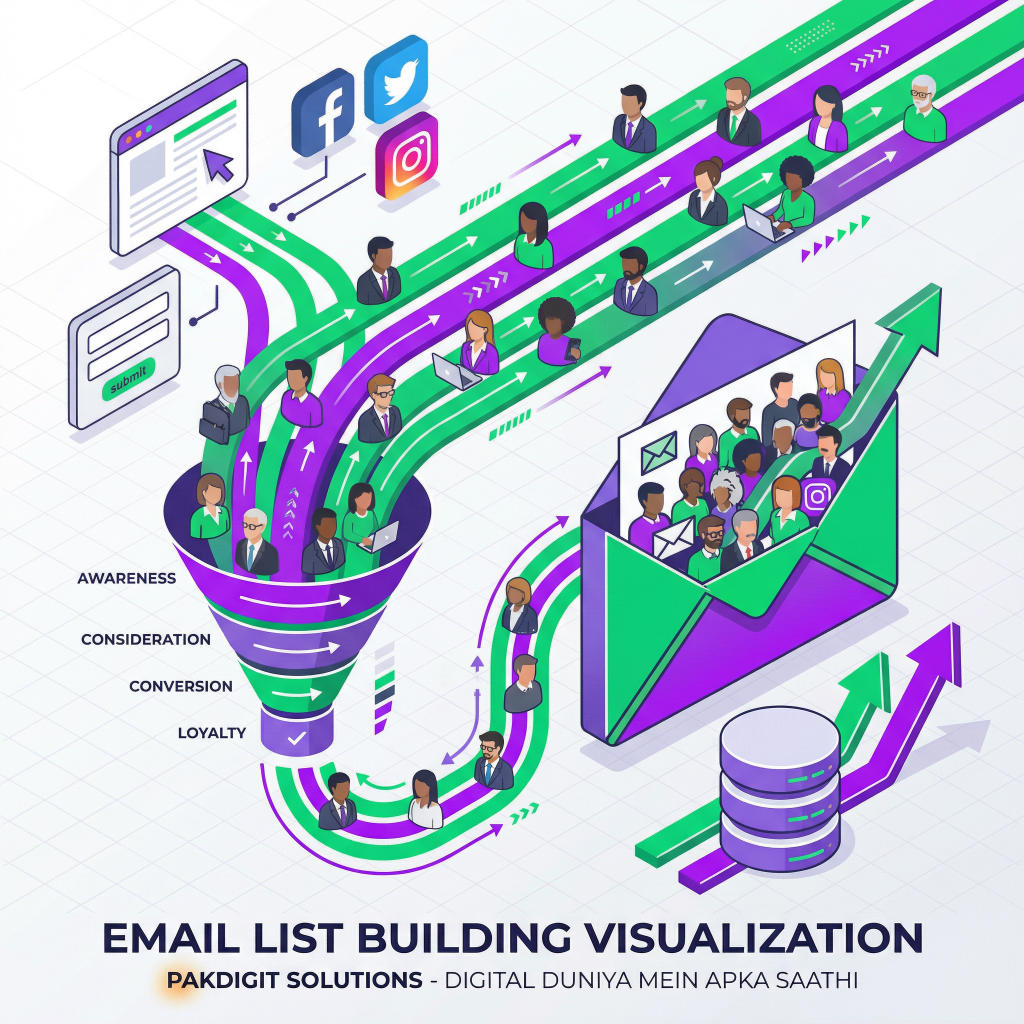
Double Opt-in Process
Implement a two-step verification where subscribers:
- Submit their email address
- Confirm subscription via a verification email
This ensures list quality and complies with regulations like GDPR.
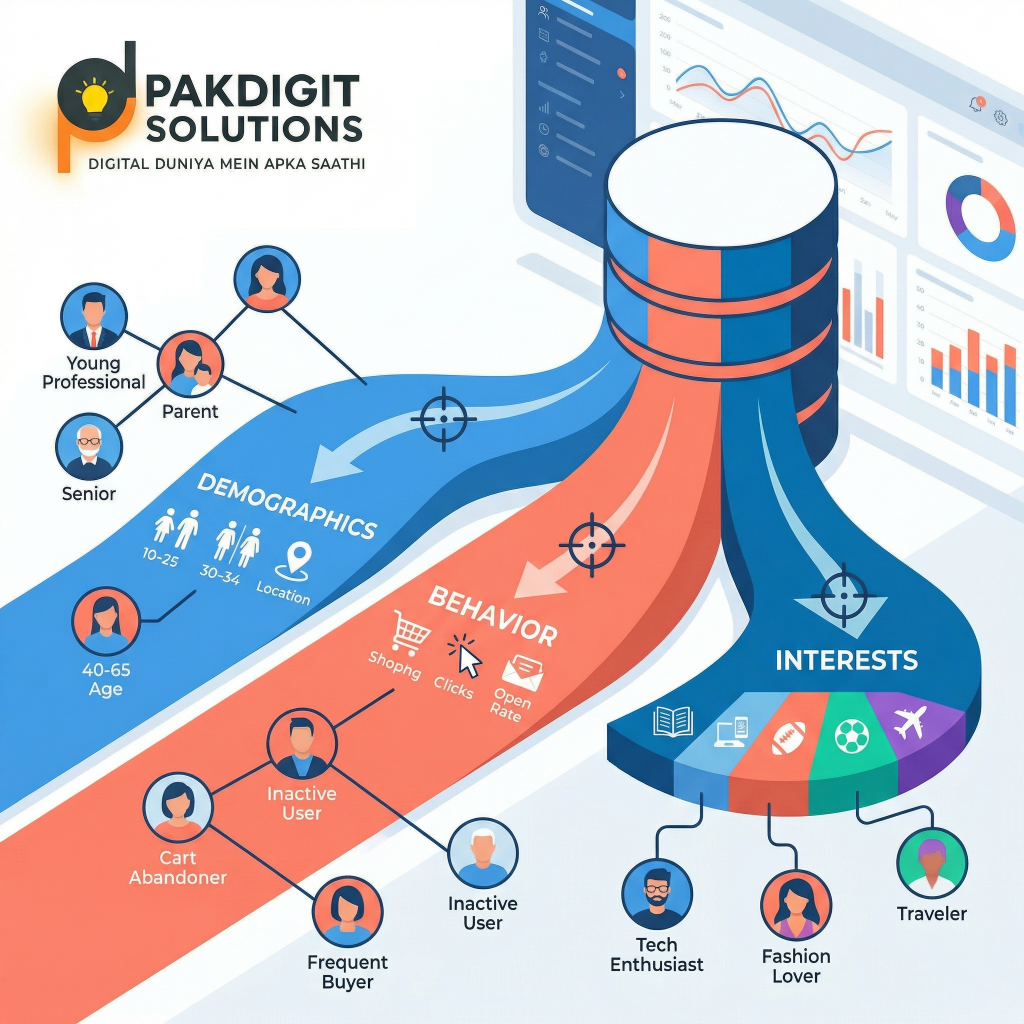
2. Email List Segmentation
Segmentation is the practice of dividing your email list into smaller groups based on specific criteria. The Quantum Group emphasizes this as a top practice for 2026.
Common Segmentation Criteria:
- Demographics: Age, gender, location, income level
- Behavioral Data: Purchase history, browsing behavior, email engagement
- Psychographics: Interests, values, lifestyle
- Customer Journey Stage: New subscribers, active customers, lapsed customers
- Engagement Level: Highly engaged, moderately engaged, inactive
Why Segmentation Matters: Segmented campaigns drive 30% more opens and 50% more click-throughs compared to non-segmented campaigns.
3. Choosing an Email Marketing Platform
Select a platform that matches your needs and budget. Popular options include:
- Mailchimp: User-friendly, great for beginners
- Klaviyo: E-commerce focused with advanced automation
- HubSpot: All-in-one CRM and marketing platform
- ActiveCampaign: Powerful automation capabilities
- Brevo (formerly Sendinblue): Affordable with SMS integration
- Mailjet: International deliverability focus
- ConvertKit: Ideal for creators and bloggers
Key Features to Look For:
- Drag-and-drop email builder
- Automation workflows
- A/B testing capabilities
- Analytics and reporting
- List segmentation tools
- Mobile responsiveness
- Integration capabilities
- Deliverability reputation
Crafting Compelling Email Content
The Anatomy of a Perfect Marketing Email:
Subject Line (50 characters or less) Your subject line determines whether your email gets opened. According to Mailjet’s 2026 trends, AI-driven personalization is becoming standard.
Best practices:
- Create urgency: “Last chance: 24 hours left!”
- Use personalization: “John, your exclusive offer awaits”
- Ask questions: “Ready to boost your sales?”
- Include numbers: “5 ways to improve your ROI”
- Avoid spam triggers: ALL CAPS, excessive punctuation!!!
Preheader Text (90-100 characters) The preview text that appears after the subject line in most inboxes. Use it to complement your subject line and add context.
Email Body
- Opening: Hook readers immediately
- Content: Deliver on your subject line promise
- Visuals: Include relevant images, but maintain text-to-image balance (60/40 ratio)
- Voice: Maintain brand consistency and conversational tone
Call-to-Action (CTA) Clear, compelling, and action-oriented buttons or links:
- “Shop Now”
- “Download Your Free Guide”
- “Claim Your Discount”
- “Learn More”
5. Email Design Best Practices
Mobile-First Approach
Over 60% of emails are opened on mobile devices. Design for mobile first, desktop second.
- Use responsive templates
- Keep width under 600 pixels
- Use large, tappable buttons (minimum 44×44 pixels)
- Single-column layouts work best
- Keep font sizes readable (14-16px minimum)
Visual Hierarchy
Guide readers’ eyes through your content:
- Logo/branding (top)
- Hero image or headline
- Primary content
- Secondary content
- CTA button(s)
- Footer with social links and unsubscribe
Brand Consistency
Forbes emphasizes that authenticity and consistency are key for 2026.
- Use brand colors consistently
- Include your logo
- Maintain consistent font families
- Use similar layout patterns
6. Email Marketing Automation Workflows
Automation allows you to send timely, relevant emails based on triggers and subscriber behavior. Klaviyo’s automation examples highlight the most effective workflows:
Essential Automated Workflows:
Welcome Series (3-5 emails)
- Email 1: Welcome and introduce your brand
- Email 2: Share your story and values
- Email 3: Highlight best-selling products/services
- Email 4: Provide helpful resources
- Email 5: Special new subscriber discount
Abandoned Cart Recovery Triggered when customers add items to cart but don’t complete purchase:
- Send within 1 hour: Reminder with cart contents
- Send within 24 hours: Add urgency or social proof
- Send within 72 hours: Offer limited-time discount
Post-Purchase Sequence
- Order confirmation (immediate)
- Shipping notification
- Delivery confirmation
- Product tips and how-to content
- Review request (7-14 days after delivery)
- Cross-sell/upsell recommendations
Browse Abandonment Triggered when visitors view products without adding to cart:
- Showcase viewed products
- Include related items
- Share customer reviews
Re-engagement Campaign For subscribers who haven’t engaged in 60-90 days:
- “We miss you” message
- Special comeback offer
- Update preferences option
- Last-chance email before removal
Birthday/Anniversary Emails Celebrate special occasions with:
- Personalized messages
- Exclusive birthday discount
- Anniversary of first purchase rewards
7. Personalization and Dynamic Content
According to Mailjet, AI-driven personalization is no longer innovative—it’s standard practice in 2026.
Personalization Strategies:
Basic Personalization:
- Using subscriber’s first name
- Location-based content
- Purchase history references
Advanced Personalization:
- Product recommendations based on browsing behavior
- Dynamic content blocks that change based on segment
- Predictive send time optimization
- Personalized subject lines and preheaders
- Custom images with subscriber’s name or data
Dynamic Content Examples:
- Weather-based product suggestions
- Inventory-based urgency messages
- Gender-specific product showcases
- VIP vs. new customer content variations
8. Testing and Optimization
A/B Testing (Split Testing)
Test one variable at a time:
Elements to Test:
- Subject lines
- Preheader text
- Email copy
- CTA button text and color
- Send timesImages vs.
- text-only
- Email length
- Personalization tactics
Testing Process:
- Form a hypothesis
- Create two variations (A and B)
- Split your audience randomly
- Send both versions simultaneously
- Analyze results statistically
- Implement winner
- Continue testing other elements
9. Email Deliverability
Getting your emails into the inbox (not spam folder) is critical. Coalition Technologies reports that achieving 95% deliverability can increase conversion rates by 52%.
Factors Affecting Deliverability:
Sender Reputation:
- Maintain low bounce rates (under 2%)
- Keep spam complaints minimal (under 0.1%)
- Consistent sending patterns
- Authentication protocols (SPF, DKIM, DMARC)
List Hygiene:
- Remove bounced emails immediately
- Purge inactive subscribers (12+ months)
- Use double opt-in
- Provide easy unsubscribe options
- Never buy email lists
Content Quality:
- Avoid spam trigger words (“FREE!!!”, “ACT NOW”, “LIMITED TIME”)
- Maintain proper text-to-image ratio
- Include plain-text version
- Test emails before sending
- Ensure all links work
Technical Setup:
- Authenticate your domain
- Use a dedicated IP (for high-volume senders)
- Maintain consistent sending volume
- Warm up new IPs gradually
10. Measuring Email Marketing Success
Key Performance Indicators (KPIs):
Open Rate
- Formula: (Emails opened ÷ Emails delivered) × 100
- Average benchmark: 15-25%
- What it tells you: Subject line and sender name effectiveness
Click-Through Rate (CTR)
- Formula: (Clicks ÷ Emails delivered) × 100
- Average benchmark: 2-5%
- What it tells you: Content relevance and CTA effectiveness
Conversion Rate
- Formula: (Conversions ÷ Emails delivered) × 100
- According to HubSpot, email marketing achieves 2.8% conversion rate for B2C and 2.4% for B2B
- What it tells you: Overall campaign effectiveness and revenue generation
Bounce Rate
- Hard bounces: Invalid email addresses (remove immediately)
- Soft bounces: Temporary issues (mailbox full, server down)
- Target: Under 2%
Unsubscribe Rate
- Formula: (Unsubscribes ÷ Emails delivered) × 100
- Average benchmark: 0.1-0.5%
- What it tells you: Content relevance and email frequency appropriateness
List Growth Rate
- Formula: [(New subscribers – Unsubscribes) ÷ Total subscribers] × 100
- What it tells you: List health and acquisition effectiveness
Email ROI
- Formula: [(Revenue – Cost) ÷ Cost] × 100
- Average: 3,600-4,200% (per Email Monday)
- Top performers achieve 7,000%+ ROI
Email Marketing Best Practices for 2026
Based on research from leading industry sources, here are the top practices:
1. Quality Over Quantity
PPR Strategies emphasizes that 2026 is the year to send fewer, better emails. Focus on value, not volume.
2. AI-Driven Personalization
Leverage artificial intelligence for:
- Predictive product recommendations
- Optimal send time prediction
- Subject line generation
- Content optimization
3. Intelligent Inbox Adaptation
Email providers are using AI to categorize emails. Ensure your emails are designed to land in the priority inbox:
- High engagement rates
- Consistent sender reputation
- Valuable, relevant content
4. Interactive Emails
Incorporate interactive elements:
- Embedded videos
- Image carousels
- Accordion menus
- Survey/poll integrations
- Add-to-cart buttons within email
5. Accessibility
Make emails accessible to all users:
- Use alt text for images
- Maintain proper color contrast
- Structure with heading tags
- Test with screen readers
- Provide plain-text version
6. Privacy-First Approach
With increasing privacy regulations:
- Be transparent about data usage
- Obtain clear consent
- Honor preferences quickly
- Provide easy opt-out options
- Secure subscriber data
Email Marketing Strategy Development
Step 1: Define Your Goals
- Increase sales by X%
- Grow email list by X subscribers
- Improve customer retention by X%
- Boost website traffic by X%
- Generate X qualified leads
Step 2: Know Your Audience
Create detailed buyer personas:
- Demographics
- Pain points
- Goals and motivations
- Communication preferences
- Buying behaviors
Step 3: Map the Customer Journey
Identify touchpoints where email can add value:
- Awareness stage: Educational content
- Consideration stage: Product comparisons, case studies
- Decision stage: Testimonials, offers
- Retention stage: Onboarding, support, loyalty programs
Step 4: Create a Content Calendar
Plan your email campaigns:
- Weekly newsletters
- Monthly product spotlights
- Seasonal campaigns
- Automated workflows
- Promotional sends
Step 5: Set Up Measurement Framework
Establish benchmarks and tracking:
- Define KPIs for each campaign type
- Set up conversion tracking
- Create regular reporting schedule
- Identify optimization opportunities
Advanced Email Marketing Tactics
1. Behavioral Triggered Emails
Beyond basic automation, implement sophisticated triggers:
- Price drop alerts
- Back-in-stock notifications
- Content recommendation based on reading history
- Milestone celebrations (100th purchase, 1-year anniversary)
- Win-back campaigns with predictive churn modeling
2. Lifecycle Marketing
Tailor communications to customer lifecycle stage:
- Acquisition: Welcome series, onboarding
- Activation: Product education, tips
- Retention: Regular updates, exclusive content
- Revenue: Upsell, cross-sell opportunities
- Referral: Advocacy programs, referral incentives
3. Email + SMS Integration
Combine channels for maximum impact:
- SMS for time-sensitive offers
- Email for detailed information
- Coordinated multi-channel campaigns
- Consistent messaging across channels
4. User-Generated Content
Incorporate customer content:
- Product reviews
- Social media testimonials
- Customer photos
- Success stories
- Community highlights
5. Predictive Analytics
Use data to predict:
- Next purchase timing
- Product preferences
- Churn probability
- Lifetime value
- Optimal send frequency
Common Email Marketing Mistakes to Avoid
❌ Buying email lists – Low engagement, legal issues, damaged reputation
❌ Neglecting mobile optimization – 60%+ of opens are mobile
❌ Sending too frequently – Causes unsubscribes and list fatigue
❌ Ignoring segmentation – Generic emails underperform significantly
❌ Weak or misleading subject lines – Damages trust and engagement
❌ Not testing before sending – Broken links, rendering issues
❌ Failing to provide value – Every email should benefit the subscriber
❌ Making unsubscribe difficult – Violates laws, frustrates users
❌ Inconsistent sending – Confuses subscribers about brand
❌ Ignoring metrics – Missing optimization opportunities
Conclusion: Your Email Marketing Success Roadmap
Email marketing remains one of the most powerful and cost-effective digital marketing channels available. With proper strategy, execution, and optimization, you can achieve remarkable ROI and build lasting customer relationships.
Key Takeaways:
✅ Build your list ethically with permission-based marketing and valuable lead magnets
✅ Segment your audience for personalized, relevant messaging
✅ Create compelling content that provides value in every send
✅ Automate strategically with workflows that enhance the customer journey
✅ Optimize continuously through testing, measurement, and improvement
✅ Prioritize deliverability with proper technical setup and list hygiene
✅ Stay compliant with email marketing laws and regulations
✅ Embrace new technologies like AI for personalization while maintaining authenticity
The most successful email marketers in 2026 are those who combine data-driven strategy with genuine value creation. Focus on building relationships, not just making sales, and your email marketing program will thrive.
Ready to launch your email marketing success? Start with one workflow, measure your results, optimize based on data, and scale what works. The inbox is waiting—make every email count
Frequently Asked Questions (FAQs)
1. What is the best time to send marketing emails?
The optimal send time varies by audience, but general benchmarks suggest:
- Best days: Tuesday, Wednesday, Thursday
- Best times: 10 AM, 1 PM, or 6 PM in the recipient’s timezone
- Worst times: Monday mornings, Friday afternoons, weekends
However, you should test with your specific audience. Many email platforms offer send-time optimization features that automatically deliver emails when each subscriber is most likely to engage.
2. How often should I send marketing emails?
According to 2026 research, quality trumps quantity. General guidelines:
- Promotional emails: 1-2 times per week maximum
- Newsletters: Weekly or bi-weekly
- Transactional emails: As needed
- Automated workflows: Based on triggers
Monitor your unsubscribe rates and engagement metrics. If these decline, reduce frequency. Always give subscribers control over email preferences.
3. What is a good email open rate?
Email open rates vary by industry, but general benchmarks for 2026:
- Overall average: 15-25%
- Excellent rate: 25%+
- Poor rate: Below 10%
Factors affecting open rates:
- Industry (B2B vs. B2C)
- List quality and engagement
- Subject line effectiveness
- Sender reputation
- Send time
- Email frequency
4. Do I need permission to send marketing emails?
Yes, absolutely. Laws like GDPR (Europe), CAN-SPAM (US), and CASL (Canada) require:
- Explicit consent before sending marketing emails
- Clear identification of sender
- Easy unsubscribe option in every email
- Honor opt-out requests promptly (within 10 business days)
- Accurate subject lines (no deception)
Violating these laws can result in significant fines. Always use permission-based marketing and maintain clear records of consent.
5. How do I grow my email list quickly?
Ethical, sustainable list growth strategies:
- Offer valuable lead magnets (e-books, templates, discounts)
- Use strategic opt-in forms (pop-ups, embedded forms, landing pages)
- Promote newsletter on social media and other channels
- Host webinars or events requiring registration
- Create gated content that requires email to access
- Run contests or giveaways
- Add sign-up opportunities at checkout or customer touchpoints
- Partner with complementary brands for co-marketing
Never buy email lists or add people without permission. These practices harm deliverability and violate laws.
6. What’s the difference between transactional and marketing emails?
Transactional Emails:
- Triggered by user actions
- Contain expected information (order confirmations, password resets, shipping updates)
- Don’t require opt-in (user initiated the action)
- Have higher open rates (80-85%)
- Primarily informational
Marketing Emails:
- Promotional in nature
- Sent to lists of opted-in subscribers
- Require explicit permission
- Average open rates (15-25%)
- Designed to drive engagement, sales, or awareness
Many brands blend these by adding promotional content to transactional emails, but the primary purpose should remain transactional.
7. How can I improve email deliverability?
Key strategies for better inbox placement:
Technical Setup:
- Authenticate your domain (SPF, DKIM, DMARC)
- Use a reputable email service provider
- Maintain dedicated IP for high volume
List Management:
- Use double opt-in
- Remove bounced addresses immediately
- Purge inactive subscribers regularly
- Never buy lists
Content Quality:
- Avoid spam trigger words
- Maintain text-to-image balance
- Include plain-text version
- Make unsubscribe easy to find
Engagement:
- Send valuable, relevant content
- Segment your list appropriately
- Monitor and maintain good sender reputation
- Send consistently (not sporadically)
8. What email marketing metrics should I track?
Essential metrics by category:
Engagement Metrics:
- Open rate (subject line effectiveness)
- Click-through rate (content relevance)
- Click-to-open rate (content quality for those who opened)
List Health Metrics:
- Bounce rate (list quality)
- Unsubscribe rate (content relevance/frequency)
- List growth rate (acquisition effectiveness)
- Spam complaint rate (content appropriateness)
Business Impact Metrics:
- Conversion rate (goal achievement)
- Revenue per email (monetary value)
- ROI (overall effectiveness)
- Customer lifetime value from email (long-term impact)
9. Is email marketing still effective in 2026?
Absolutely yes! Despite predictions of its demise, email marketing remains incredibly effective:
- ROI of $36-$42 for every $1 spent (Leadoom)
- Nearly 1 in 5 companies achieve 7,000%+ ROI (Email Monday)
- 4.4 billion email users worldwide (projected for 2026)
- Email is 40x more effective at customer acquisition than social media
- Automated workflows deliver 30x better returns than one-off campaigns
The key is adapting to modern best practices: personalization, segmentation, mobile optimization, and value-driven content.
10. How do I write subject lines that get opened?
Effective subject line formulas:
Create Urgency:
- “Last chance: Sale ends tonight”
- “Only 3 spots remaining”
Use Personalization:
- “Sarah, your exclusive offer inside”
- “Recommended for you based on recent purchases”